Joy to the world!

There’s just SO many holiday wishes we here at the Historical Society want to send you, we decided we’d send you one every day this week! Hope that means your festivities will be seven times as merry… even if perhaps, the pandemic has cramped your style. Here’s to looking forward to seeing this corona virus be history soon.

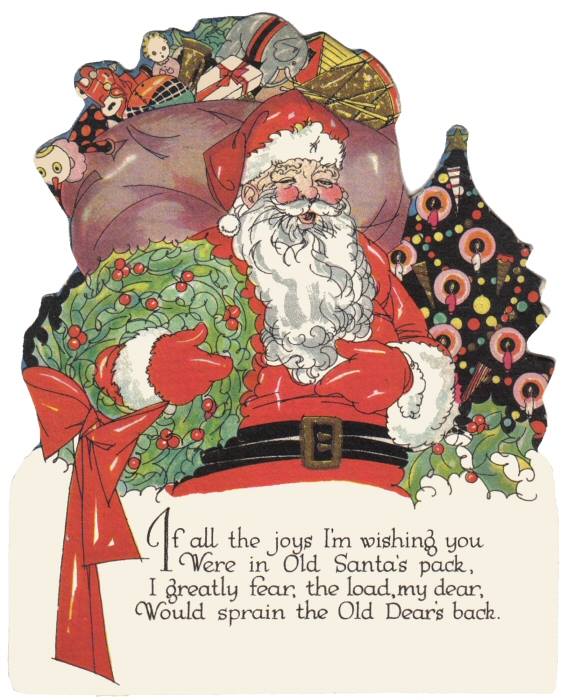
Christmas Card from Sarasota 1936

There’s just SO many holiday wishes we here at the Historical Society want to send you, we decided we’d send you one every day this week! Hope that means your festivities will be seven times as merry… even if perhaps, the pandemic has cramped your style. Here’s to looking forward to seeing this corona virus be history soon.

So here’s our first holiday wish, one sent by an esteemed Sarasota resident:

More about Joe Steinmetz from Sarasota History Alive.

And Joe, back in the 1950’s when folks posed with that which they loved.

There goes the neighborhood.

Boatload of fish

After all, this much fish is way too much for dinner tonight. (Photo from Florida Memory.)

On this day in history, December 12, 1902, the Sarasota Ice, Fish, and Power Company was granted the first permit to construct a commercial plant smack dab in town. (It was located, according to one source, near Lemon Avenue and State Street.) Sarasota had been a town for less than 2 months at that point.

SIFP generated electricity to make ice to keep the catch fresh. It wasn’t for seven more years that Sarasota got street lights (2, count ’em, 2) and from that point on, there was nothing but progress progress progress. (Well, except for the Bust. Another tale to tell.)

We’re happy to announce that this fishy Day in History is dedicated to Elisabeth Waters,

who was gifted with a “Claim Your Day” by Alexandra Jupin in our effort to keep our head above water in this economically-challenging pandemic time. If you’d like us to find an appropriate Day in History for you to claim, you can get the details here.


Preserving History: You CAN do it! Other

We’ve covered a lot of material goods in this series, but there’s lots more, of course. So our concluding post is the other stuff you cherish. What have we missed? Tell us in the comments below.

We’ve gathered up some final resources about preserving other stuff. Toys and dolls and paintings and even swords.  Check it out, and see the other categories we’ve covered.

Rosie the History Riveter

Our Rosie thinks history is riveting!

Saving toys.

And dolls.

Paintings.

Those ivory bits and bobs Grandpa collected.

And metal stuff. Like that VMA dress sword Great-Uncle James wore when he was attending the Venice campus. 

If you have sources and links to share, thoughts to add, stories to tell, comment below. We LOVE to get conversations going, so chime in!

Click each topic in this series to view: Photographs/ Papers/ Furniture/ Fabric.

Where to get archival supplies: Gaylord, Talas, and University Products.

And, as always, we can count on the Library of Congress to guide us to deeper knowledge.

(The “real” Rosie the Riveter: Who was she? And the well-preserved model for our meme? She’s real too.)

Preserving History: You CAN do it! Furniture

You can do much to preserve valuables without going to extreme efforts and expenses, just by keeping some basic things in mind. We’ve gathered up some resources for you in our series. If you have other sources and links to share, thoughts to add, stories to tell, comment below. We LOVE to get conversations going, so chime in!

Rosie the History Riveter

Our Rosie thinks history is riveting!

Antiques and inherited furniture

This is the topic that got us started on this series. A Facebook friend posted a photo of a graceful cherry dining table with multiple leaves, asking Continue reading

Preserving History: You CAN do it! Fabrics

Why care about old stuff? Because preserving artifacts from historical events, or even just times, helps us and future generations learn about, remember, and honor the people and ideas that went before. Maybe you just want to be able to show the great-grandkids your grandmother’s wedding veil (the one with wax orange blossoms), or maybe you love the vintage baby blanket you found in an antique shop on some back road somewhere.

We’ve gathered up some resources for you in a small series. If you have sources and links to share, thoughts to add, stories to tell, comment below. We LOVE to get conversations going, so chime in! Today? Fabrics and soft goods.

Rosie the History Riveter

Our Rosie thinks history is riveting!

From handed-down quilts to your first apartment’s barkcloth curtains to Continue reading

Preserving History: You CAN do it! Papers

The second in our series: Today, preserving papers and letters.

You can do much to preserve such valuables without going to extreme efforts and expenses, just by keeping some basic things in mind. We’ve gathered up some resources for you which we’ll be presenting in a small series. If you have other sources and links to share, thoughts to add, stories to tell, comment below. We LOVE to get conversations going, so chime in!

Rosie the History Riveter

Our Rosie thinks history is riveting!

Papers and letters

Well, the first tip, “don’t store them in your basement”, doesn’t really apply to us Floridians (although it’s amazing how many folks give no thought to sticking things in that 130-degree attic including your editor) but the rest of this post from Minnesota is useful.

Oh, those photos from the fair and Uncle John’s promotion at work. You might well ask “How do I save a newspaper clipping?” and here’s what we’d say:

  • If newspaper clippings are being kept for the content as distinct from keeping the original paper as an artifact, photocopy onto acid-free paper, which will last much longer than the original.
  • If the original clipping is being kept as an artifact, store in an acid-free envelope, folder or sleeve.

To keep those family letters folded in their envelopes, that is the next question. Here’s the answer from My Heritage. And who would know better how to safeguard those old discharge papers and report cards than the National Archives here.

Tune into tomorrow for another riveting episode of Preserving History.

Where to get archival supplies: Gaylord, Talas, and University Products.

And, as always, we can count on the Library of Congress to guide us to deeper knowledge.

(The “real” Rosie the Riveter: Who was she? And the well-preserved model for our meme? She’s real too.)

Preserving History: You CAN do it! A HSoSC mini-series

Why care about old stuff? Because preserving artifacts from historical events, or even just times, helps us and future generations learn about, remember, and honor the people and ideas that went before. Maybe you just want to be able to show the great-grandkids what you looked like as a newly-wed, or maybe you like old furniture and want to keep it in working shape.

You can do much to preserve such valuables without going to extreme efforts and expenses, just by keeping some basic things in mind. We’ve gathered up some resources for you which we’ll be presenting in a small series. If you have other sources and links to share, thoughts to add, stories to tell, comment below. We LOVE to get conversations going, so chime in!

Rosie the History Riveter

Our Rosie thinks history is riveting!

First, there’s photographs. Oh so many photographs.

Those folks up in Minnesota tell us how to preserve old photographs.

AARP knows what you need to know. (Heck, they even have some thoughts on how to date old photos.)

If you’re more concerned with saving digital photos, The Atlantic Monthly talks about options. So does the Library of Congress.

Tune in tomorrow for more resources to help you preserve the past.

Where to get archival supplies: Gaylord, Talas, and University Products.

And, as always, we can count on the Library of Congress to guide us to deeper knowledge.

(The “real” Rosie the Riveter: Who was she? And the well-preserved model for our meme? She’s real too.)

Celebrating your Flanniversary

How do you celebrate your Flanniversary?

The Diving Girl signified a motel with a swimming pool

You don’t? What kind of heathen are you? (Florida natives, forgive me. This chastisement is not intended for you.)

When you arrived in Florida from Up North, you gained a day to celebrate, to drink fancy tourist-y drinks and stick a candle in a Key Lime pie. Have some snow crab and some swamp cabbage. Or at least, go to Publix.

Don’t miss out! Celebrate today! (Well, celebrate on your anniversary.)
You know that sign:

Florida/ I wasn’t born here but I got here as fast as I could

That’s a sign to be proud of. We may have been born in New York, went to college in Ohio, raised the kids in Virginia and Iowa… but we all got here as fast as we could, and that’s worth an annual party, right?

(Ed. Note: My Flanniversary is July 17. It was the hottest July on record, and after he hauled boxes and boxes from the van to the new-to-us house, my sweaty honey reckoned as how maybe we’d made a grave mistake. I cranked up the AC, gave him a cool beverage, and jumped in the pool.)

Recognize our illustration as the Jantzen logo? Read about the history of the Red Diving Girl here.

Recipes from the Historical Society

Back this spring, when were sure The Great Pause would pass within weeks, we posted a Pantry Recipe every evening on our Facebook page. They proved so popular, we thought we’d share a few now, in case you are as sick of your own standard recipes as we are.

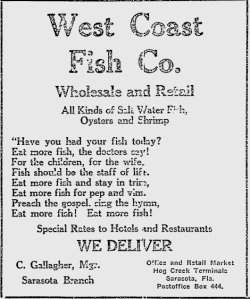
Eat more fish for pep and vim!

Sarasota ad from the Historical Society of Sarasota CountyYes, salmon probably wasn’t an offering at the fish company at the Hog Creek Terminal (just a hop, skip, and splash from where we now are in Pioneer Park), but since it’s a fish easily obtained around here nowadays, here’s the best recipe. Pretty enough for company, easy enough for any old day. It’s Salmon and Peppers With Caper Vinaigrette.

Was it Julia Child who said to always start with a pot bigger than you think you’ll need?

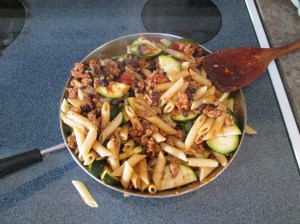
Never mind. Here’s our Pantry Recipe for Pasta Cubana.
 
Start with bite size bits of chicken or pork or even ground turkey. Saute 5 minutes in olive oil.
Season with salt and pepper.
Add 1-1/2 cup mild salsa, a can of rinsed and drained black beans, and 1-1/2 teaspoon cumin. Simmer, covered, 10 minutes.
Add zucchini cut into half-moons and a minced clove of garlic. Simmer 5 minutes more.
Toss with a pound of cooked pasta, rotini or some such sturdy shape. (You can also just serve over rice if you prefer.)
Vary as you see fit!
 

A classic to replace your mother’s

The Historical Society of Sarasota County presents: Burnt Meatloaf!

For the best meatloaf you ever made (slice leftovers for sandwiches!) we take you over to Auntie Kate’s, who promotes shopping instead of cooking. (Feel free to substitute other favorite activities, like reading about history, walking the dog, watching the sun set.)
(Be sure to read the notes before you start.)

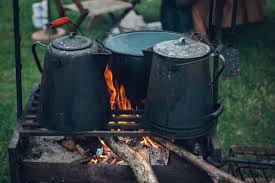
Cooking over an open fire was standard in Sarasota for decades.s

(The last time we posted recipes, we could see the smoke of distant cookfires all around us. In case you missed those dinner suggestions.)

I pledge allegiance…?

Just how many flags did present-day Sarasota County fly?

Well, a lot of these flags are metaphoric, since there weren’t a lot of folk around here for many years, and they were far too busy tripping over saw palmetto roots to bother with flags, but here’s a quick rundown to amuse you and amaze (and quite possibly bore) your friends and family:

Cleverly dubbed the "Castle and Lion" flag, this was actually the King's flag, since in 1513 there was no national flag of Spain1513: Near present-day St. Augustine, Spanish explorer Juan Ponce de León came ashore and claimed the territory for the Spanish crown. Cleverly dubbed the “Castle and Lion” flag, this was actually the King’s flag, since in 1513 there was no national flag of Spain.

The Burgundian saltire

1565: The indigenous folks were indignant, though, so successful Spanish colonization of the Florida peninsula actually began at St. Augustine in 1565. The Burgundian saltire, or Cross of Burgundy, represented Spanish rule in Florida from 1565 to 1763. (BTW: That saw-tooth design? It’s actually, really, called raguly.)

Those French, they have to do it twice, oui? The French established a short-lived settlement, in 1564, near Jacksonville at the mouth of the St. Johns River. During this period there was no single official flag for France. Their flag may have had a blue field which bore the royal golden fleurs-de-lys. The French also occupied Pensacola from 1719 to 1722 during the War of the Quadruple Alliance.


The red Cross of St. George, the patron saint of England, was the major element of the British flag. In combination with the white Scottish Cross of St. Andrew, it formed the Union flag. This flag flew over Florida from 1763 until 1784.

Yup, the Spaniards did it twice too. Charles III created this Spanish national flag in 1785. It flew over Florida until the United States took official possession of the territory in 1821.

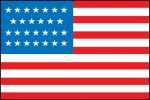
The flag of the United States had twenty-three stars when the Treaty with Spain, ceding Florida, was ratified and proclaimed on February 22, 1821.

The United States government admitted Florida as the twenty-seventh state on March 3, 1845. By law, new stars were added to the national flag on the fourth of July following the admission of each new state, so a twenty-seventh star was added for Florida on July 4, 1845.

During the Civil War, Floridians fought under several different patterns of Confederate flags. The “Stars and Bars” flag, now called the Confederate first national pattern, was selected (without a formal vote) by the Confederate government in March 1861. Read how the Confederacy ran through several design changes, all the while waging war. 

Bonus points if you can identify this flag and where and when it was flown. Gold star if you remember any of your high-school Latin. (Click the graphic for the answer.)


Further reading and sources: History.com inspired this blog post. Each flag links to more info about its time period flying over Florida. And this way cool interactive map shows the contemporary boundaries of what we now call Florida. The various designs of the state flag can be seen here, and the Muskogee, Miccosukee, and Seminole flags are here.

What day is it?

Want to Claim Your Day to Save the Day at the Historical Society, but you’re too selfless to choose your birthday or your anniversary?

How about one of these notable Sarasota County dates?

* If you choose November 6, you just LOVE phone calls. That’s the day, in 1899, that Harry Higel received Sarasota’s first phone call via wires strung up on pine trees. We assume it wasn’t a robocall.

Cool old telephone, probably not in Sarasota though.

We doubt Harry’s phone looked like this, but this was just way too cool to pass up.

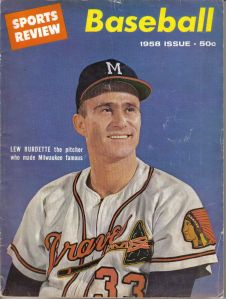
* Grab October 28 if you love baseball and Payne Park. That’s the day Lew Brudette, the hero of the 1957 World Series, came home to a motorcade to the park and was feted with a key to the city and a 16′ cabin cruiser.

Lew Brudette in Sarasota. Got a cabin cruiser out of it.

The man, the myth, the cabin cruiser.

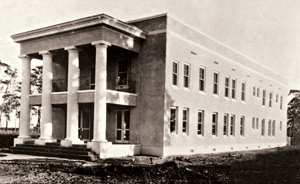
* Then there’s Sarasota Memorial Hospital, where you or your kids might have been born? It opened November 1 1925 with 32 beds. It actually opened on November 2, but that day’s been Claimed by an HSoSC supporter, so we’ll use November 1, if you want to make someone’s Sarasota debut your day!

Sarasota Memorial Hospital the early days.

To exit the hospital through those sturdy columns? You were a true Sarasotan!

* One of my personal faves? Royalty arrives in Sarasota, Nov 30 1910. Bertha Palmer’s niece and nephew-in-law, Princess and Prince Cantacuzene, come to see what this whole real estate venture of Aunt Bertha is all about. They stayed at the Belle Haven.

Bertha Palmer in Sarasota

The Princess wasn’t along on this tromp through the wilds of Sarasota.

* Prefer to remain low-key but still help HSoSC survive the pandemic? Just tell Linda, note on your PayPal donation, or drop an email letting us choose a day to dedicate to YOU (Hint: My birthday is July 18.)

The rabbit hole of historical curiosity

We talked a while back about pineapples and their place in Sarasota County history.
Well, that just wasn’t enough for your Intrepid Blogger here at HSoSC. No, she had to delve into the local history of the grapefruit.

And that led to an intriguing article titled

Grapefruit Is One of the Weirdest Fruits on the Planet

Grapefruit info found by the Historical Society of Sarasota County

Graphic from this article

when all we really were seeking was some info on a fellow by the name of Kimball Chase Atwood who was quite an important fellow in this area back when.

So here’s the rabbit hole we fell into:

Oh, and Kimball Jr., the 3rd, and the IVth? They’re a bunch of high performers, but I’ll leave that to your curiosity. I’ve gotta go walk the cat now; he’s had a close call with death today.

The Historical Society of Sarasota County's Curious Cat

*[Donezo] To be thoroughly, physically, and completely done.

Graphic altered from one on Cinema Vet Service’s website.


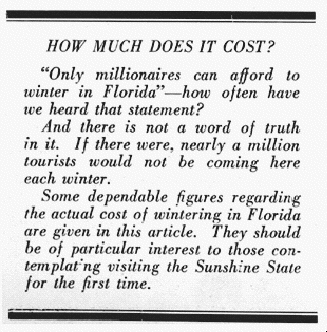
How much does it cost to winter in Florida in 1924?

(From an article written in 1924 by Karl H. Grismer)*
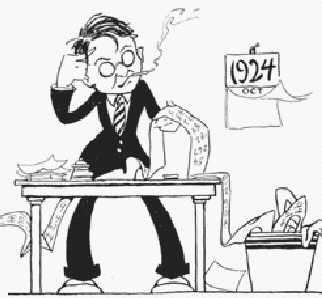

Percy Gotrocks, who graces Palm Beach with his presence during the winter months, considers himself fortunate if he can get through a season without parting from about sixty thousand dollars. His ‘shack’ on Ocean Boulevard has a retinue of servants that could man a hotel, and their wages are only a small part of Percy’s expenses. The way his parties waste away his bankroll is almost a crime.

Of course, Percy could economize if he cared to–but what would his friends think! He has to put on the dog or people will get the idea that the Giltedge Investment Company, of which he is president, is going to the bow-wows. As for Mrs. Percy, she wouldn’t think of coming to Florida without buying at least a dozen new gowns, fifteen or twenty pairs of shoes, and a couple of thousand dollars worth of other stuff. Why, she wouldn’t feel half dressed! So she splurges handsomely, and Mr. Percy pays the bills.

Not everyone who winters in Florida can afford to disregard expenses like Mr. and Mrs. Percy. Most people have to watch closely every item of expense, and if the total threatens to mount too high, they stay up North, regardless of the discomforts of northern blizzards. The sunshine and the flowers of Florida call them, but they turn a deaf ear.

There is no mystery regarding the cost of wintering in Florida. Despite all ideas to the contrary, a person can estimate before leaving home how much his expenses will be. And he can come within a few dollars of being right. There need be no guesswork about it.
The first item to consider is the cost of transportation. That is the simplest of all. By inquiring at the railroad ticket office the prospective tourist can learn exactly how much the fare will be. For persons living north of the Mason-Dixon line and east of the Mississippi the fare would probably average $60 each way, including Pullman, or $120 for the round trip.

Following transportation, the next major item of expense is that of rent. Although many tourists live in hotels, the majority leases houses or apartments for the season. And the prices, of course, vary greatly. They range from a medium of about $250 for the season to $3,000 or even more.

Small houses, in the suburbs, can sometimes be obtained for the same price as the cheaper apartments. As a general thing, however, the minimum seasonal rent for a place with modern conveniences and adequate furnishings is about $400. A five-room house, close in, can be obtained for from $700 to $1,000.

Many persons may think the above rents are excessive. It must be remembered that the houses and apartments in the resort city remain empty during the summer months or else are rented for very small amounts. In order to break even the resort city landlord must charge as much for the winter season as the northern landlord does for the whole year.

The wide range of existing rents makes it difficult to estimate exactly just what the tourist will have to spend for living quarters. But for the purpose of estimating the average cost of wintering in Florida, let’s use the $400 figure.

The next major item of expense, following transportation and rent, is that for food. To give exact figures for this expense, of course, is impossible. One tourist cooking his own meals, may live well on $5 a week or less. Another, eating the most expensive foods at an expensive restaurant, may pay $5 or more each day. The tourist may spend as much as or just as little as he chooses. It all depends upon his appetite and his purse.

The tourist who eats regularly in cafeterias and restaurants can figure that he can get by easily for $2 a day, and have everything he wants to eat. The chances are he will have enough left over from the weekly food allowance of $14 to send a box of citrus fruit to his northern friends occasionally.

To get back again to the problem of estimating the average cost of wintering in Florida, for a 6-month season the total cost for food and household expenses would be about $300.

Transportation, rent and food are the major items of expense. Aside from those there is nothing that will mount into money. The matter of clothes can be dismissed almost entirely. The tourist need only bring his summer clothes and a few winter garments along with him and he will be all set.

Amusements will not cost the tourist half as much as it does up North. In the public parks he can play all manner of games; he can go fishing; he can attend the public band concerts and listen to the music of the best bands in the country; he can attend the entertainments of the tourist societies. All this costs him next to nothing.

In summarizing, let us figure how much it costs a man and wife to enjoy a Florida winter. The transportation cost for the couple would be about $240. The rent total would be about $400. The cost of meals and household expenses, for a six-month season, would be about $300, considering that the couple ate at home. Allow $100 for incidentals. That brings the complete total up to $1,040 for the sixmonth season, certainly not a prohibitive amount for persons in even very moderate circumstances.

Is a winter in Florida worth that amount? Is it worth it to leave the snow, and rains, and gloom, and sickness of a northern winter, to go to the land where all the time is summer; where the mocking-birds sing their songs of gladness; where the palm trees are gently waved by warm breezes from gulf and ocean? We’ll say it is!

And when you come to Florida and try one of the summerwinters for yourself, you’l say so, too.

*Original source material courtesy USF.
John Ringling’s Ghost Hotel

Visit the unfulfilled promise of a Longboat Key Ritz Carlton with “Bill and Nancy”… she’s wearing those shorts… wait… not Bermudas but Jamaicas! Isn’t it a gas to remember details like that? Click to watch this Florida Memory film:

John Ringling’s Ghost Hotel