
If Florida’s checkered history seems a mite confusing, it is. This Day in History, July 13 1781, might clear things up a little.
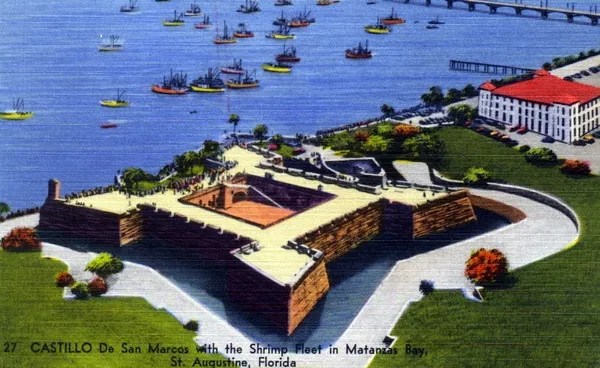
On this day, Members of the American Continental Congress recommended “relief payments” for American prisoners of war released from British captivity at St. Augustine.
Interesting. I wonder if those released prisoners had to
return to the US to get their payment? Or if some chose to stay in that foreign land.
Remember, St. Augustine was a British colony from 1764 until 1784, when Spain regained Florida.
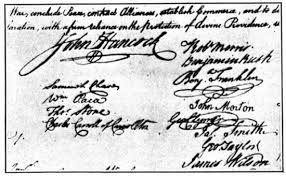
From the onset of the American Revolution in 1775, the British Crown Colony in East Florida was a Loyalist bastion. In its capital, St. Augustine, the British lodged as prisoners many American Patriots and their French allies. Most of these prisoners were given the liberty of the town, but some were held in Castillo de San Marcos. A few captives rented quarters, but most of the men were housed in the unfinished State House, which stood near this spot. By the end of 1780, these prisoners included three signers of the Declaration of Independence–Thomas Heyward, Jr., Arthur Middleton, and Edward Rutledge.
Info courtesy of Florida History’s Nick Wynne on Facebook, https://fcit.usf.edu/, and https://www.floridamuseum.ufl.edu/


Thanks Kate for today’s history lesson…. jk
LikeLike